Women Take Their Rightful Place in the Story of the West at the Briscoe
Celebrate Hispanic Heritage Month Through Art, History and Culture at the Briscoe
The women who shaped Texas and Mexico were not simply witnesses to history. They were participants, survivors, cultural transmitters, laborers, activists, mothers, revolutionaries and community leaders whose resilience and determination helped shape the cultural landscape connecting Mexico, Texas and the American West
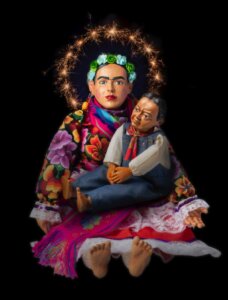
Opening Oct. 15 at the Briscoe Western Art Museum, Kathy Sosa: Revolutionary Women of Texas and Mexico brings those stories to the forefront through more than 30 works by San Antonio artist Kathy Sosa. On view through June 14, 2027, the exhibition complements the Briscoe’s landmark Tejano Legacy: Another American Origin Story and offers a contemporary artistic continuation of the history explored throughout that exhibition. Works featured include paintings, mixed media and sculpture.
“Women have always been essential to the story of the West, but too often their contributions have been minimized or left out altogether,” said Liz Jackson, President and CEO of the Briscoe Western Art Museum. “Kathy’s work gives these women the presence they deserve. Through her portraits, we encounter women who endured upheaval, crossed borders, preserved traditions, raised families, built communities and created change. The exhibition makes that history personal and reminds us that these women didn’t simply live through history – they helped shape the Texas and American West we know today.”
Revolutionary Women of Texas and Mexico will mark the reopening of the Briscoe’s Women of the West Gallery, currently closed as part of the museum’s ongoing renovation. The refreshed gallery will reopen in time to welcome Sosa’s exhibition and expand the stories of the women who built and shaped the West.
Revolutionary Women: History Through a Contemporary Lens
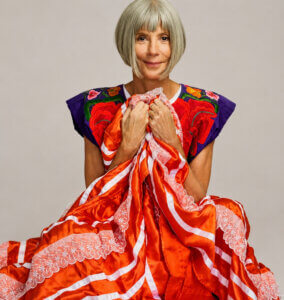
San Antonio artist Kathy Sosa is a self-taught artist whose work explores mestizaje and the distinctive cultural identity of the Texas-Mexico borderlands. A Spanish term for the mixing and blending of peoples and cultures, mestizaje historically referred to racial and ethnic mixing, particularly among Indigenous peoples and Europeans in the Americas. Over time, the term has also come to describe a broader cultural process: the convergence of traditions, languages, ideas, identities and ways of life.
For Sosa, mestizaje is not simply a historical concept. It is the living culture of the Texas-Mexico borderlands – the blending of peoples, races, ethnicities, languages, ideas, habits and cultures that she has experienced since childhood. In San Antonio, she sees it expressed in everything from language and music to food, clothing, family traditions and everyday life.
That exploration takes on a particularly human dimension in Revolutionary Women of Texas and Mexico. The exhibition draws upon Sosa’s book, Revolutionary Women of Texas and Mexico: Portraits of Soldaderas, Saints and Subversives, while also encompassing other women and acts Sosa considers revolutionary. The exhibition focuses on women whose lives and actions challenge conventional ideas about who shaped the history of Texas, Mexico and the American West. Her subjects were not simply witnesses to history. They were participants, survivors, cultural transmitters, laborers, activists, mothers, revolutionaries and community leaders.
After a career in Hispanic advertising and communications, Sosa began painting at age 48 and has spent more than two decades telling stories of borderlands culture through painting, mixed media, public art and altar installations. Her work draws inspiration from Mexican and Mesoamerican visual traditions, incorporating portraiture, textiles, pattern and symbolism to explore women, identity and memory. Her nationally recognized exhibition Huipiles: A Celebration debuted at the Mexican Cultural Institute in Washington, D.C., as part of the Smithsonian Latino Center’s “Mexico at the Smithsonian” before traveling to San Antonio’s Museo Alameda.
Sosa is the author of Mestizaje: The Feminist Art of Kathy Sosa and coeditor and illustrator of Revolutionary Women of Texas and Mexico: Portraits of Soldaderas, Saints, and Subversives. She is co-producer of the documentary series Children of the Revolución: How the Mexican Revolution Changed America’s Destiny, chronicling the history of the Texas-Mexico borderlands. Her work has been exhibited across the country and featured by national and regional media.
A Contemporary Companion to Nearly 400 Years of Tejano History
The concept of mestizaje also bridges Sosa’s work and Tejano Legacy: Another American Origin Story, the largest and most ambitious exhibition in the Briscoe’s history. On view through Jan. 18, 2027, Tejano Legacy explores nearly 400 years of Tejano history, culture and identity through more than 100 artworks and artifacts. Its scholarship examines the people, cultures, migrations, conflicts, faith, traditions and identities that shaped Texas and demonstrates how generations of cultural exchange created a distinctive borderlands culture that remains vibrant today.
Where Tejano Legacy presents that story through historical art, objects and scholarship, Revolutionary Women of Texas and Mexicooffers a focused, contemporary examination of its human dimensions. Sosa’s women reveal how culture and identity endure through periods of migration, conflict and profound change, carried forward through language, food, religion, family, music, storytelling, dress and memory. The connection is particularly fitting because Sosa is among the contemporary artists represented in Tejano Legacy, demonstrating how the history explored throughout the exhibition continues to inspire artists and shape cultural identity today.
Celebrate Hispanic Heritage Month at the Briscoe
With Tejano Legacy and Selena Forever | Siempre Selena currently on view, a full slate of fall programming and the October arrival ofRevolutionary Women of Texas and Mexico, the Briscoe offers visitors multiple opportunities to explore the breadth and continuing influence of Tejano and Mexican American history and culture during Hispanic Heritage Month and throughout the fall.
“Hispanic Heritage Month gives us an opportunity to celebrate stories and traditions that have shaped our community for generations and continue to shape it today,” Jackson said. “At the Briscoe, visitors can experience those connections across centuries – from the history and scholarship of Tejano Legacy to John Dyer’s photographs of Selena and Kathy Sosa’s contemporary interpretations of extraordinary women. Together, they show that Tejano and Mexican American stories not only deserve to be celebrated but are also essential to understanding Texas and the American West.”
Featuring more than 100 paintings, sculptures, maps, saddles, weapons and rare historical artifacts from museums and private collections across the United States and Mexico, Tejano Legacy includes several works considered part of Mexico’s cultural heritage that are being exhibited in the United States for the first time. An original documentary, immersive interactive experiences and a 208-page bilingual exhibition catalog further enrich the visitor experience.
Selena Forever | Siempre Selena, on view through Jan. 4, 2027, features photographer John Dyer’s images of Selena Quintanilla from sessions between 1992 and 1994, capturing a pivotal period in the Tejano superstar’s rise. Large-scale portraits are presented alongside boutique photographs, magazine covers and ephemera, celebrating Selena not only as an icon but as part of the continuing story of Tejano culture and its influence on Texas and beyond.
Fall at the Briscoe: Experience Tejano Culture Beyond the Galleries
The Briscoe brings the stories and themes of Tejano Legacy to life throughout the fall with programs exploring Tejano history, identity, art and living culture. From Lotería and scholarly conversations to hands-on art, live music and film, the lineup offers visitors opportunities to experience the culture celebrated throughout the exhibition in new ways.
Sept. 19 | Tejano Legacy Academic Symposium, 2–4 p.m.
Go behind the scholarship of Tejano Legacy: Another American Origin Story during a special academic symposium exploring the research behind the landmark exhibition and its bilingual catalog. John Phillip Santos, acclaimed author, filmmaker and UT San Antonio scholar in Mestizo Cultural Studies, will moderate a conversation with D.B. Briscoe, Ph.D., Texas historian and lecturer at Texas A&M University–San Antonio; William Kiser, Ph.D., historian, author and scholar of the American West and U.S.-Mexico borderlands; and Tejano Legacy guest curator Gabriela Gámez. The panel discussion will take place from 2–3 p.m., followed by a 3–4 p.m. tour of Tejano Legacy, offering participants an opportunity to experience the exhibition through the scholarship and ideas that shaped it. The symposium is free with advance registration.
Sept. 26 | Sculpture Masterclass with Enrique “Kiko” Guerra, 10 a.m.–4 p.m.
Experience the art of sculpture firsthand during an intimate, day-long masterclass with Enrique “Kiko” Guerra, whose work is featured inTejano Legacy. The intensive workshop offers the opportunity to learn directly from Guerra as he shares his artistic process, approach to sculpture and techniques while guiding participants in creating their own work. The masterclass is $135 for nonmembers and $100 for Briscoe members.
Trained at Paier College of Art and later apprenticed to noted artists Robert Lougheed and Tom Lovell, Guerra works in both bronze sculpture and oil, drawing inspiration from the people and landscapes of northern Mexico and South Texas. His monumental works include El Caporal in the Briscoe’s McNutt Sculpture Garden and a sculpture of Juan Seguín at the Alamo. All materials and lunch are included.
Oct. 3 | What Does It Mean to Be Tejano Today? Tejano Culture Panel, 1–3 p.m.
Erika Prosper, former First Lady of San Antonio and longtime civic and business leader; Eduardo “Eddie” Vega, San Antonio Poet Laureate whose work explores food, Tejano culture and social justice; and John Phillip Santos, acclaimed author, filmmaker and UT San Antonio scholar in Mestizo Cultural Studies, come together for a conversation exploring Tejano culture, identity and community and what it means to be Tejano today. The discussion brings the history explored in Tejano Legacy into the present, considering how Tejano identity is expressed, preserved and reimagined across generations. The panel is free with advance registration.
Oct. 22 | Llamativa Free Concert, 6–8 p.m.
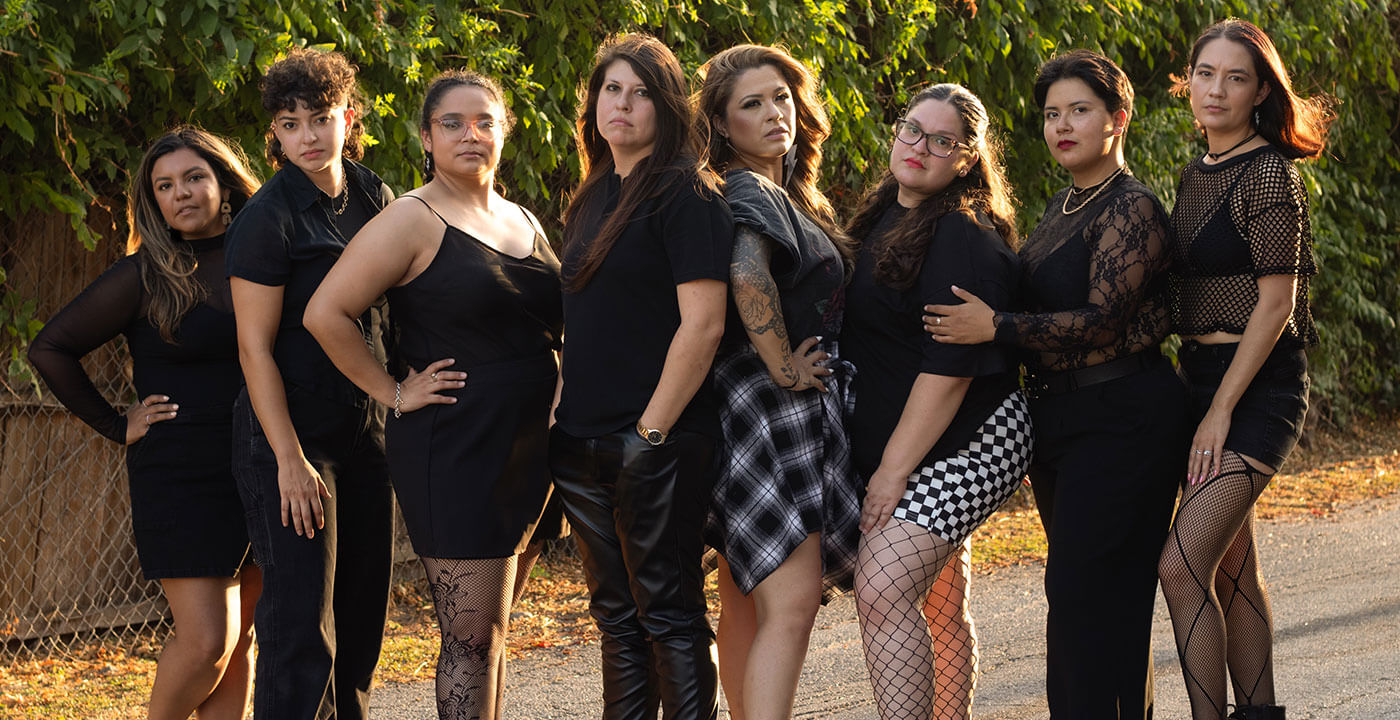
Experience Tejano culture through music when Llamativa, San Antonio’s all-female cumbia group, takes the stage for a free live performance. The evening moves the celebration beyond the galleries with the rhythms of cumbia and another expression of the living culture explored throughout Tejano Legacy. The concert is free and open to all ages.
Nov. 7 | Los Tejanos Film Screening and Conversation, 1–4 p.m.
Explore Tejano history through film with a special screening of the documentary Los Tejanos. The screening will be followed by a conversation and audience Q&A with John Phillip Santos, acclaimed San Antonio author, filmmaker and scholar of Mestizo Cultural Studies; producer Jeri Wachter, co-founder of Important Films Media whose documentary work explores history and social justice; and Emmy-winning filmmaker Joseph C. Stillman, director and producer of Los Tejanos: A 500-Year History.The screening is free with advance registration.
Nov. 19 | Truly Texas Mexican Film Screening, 6–8 p.m.
Food becomes a lens for exploring history, identity and cultural memory during a special screening of the documentary Truly Texas Mexican. The film explores how food traditions carry history and culture across generations, providing another way to consider the continuing evolution of Tejano identity and community. The screening is free with museum admission.
Programs and details are subject to change. For the latest information about these and other Briscoe programs, visit the Briscoe’s calendar of events.
All photos courtesy Briscoe Western Art Museum. Feature photo: Llamativa.