Universal’s 1980s House of Horrors
Every movie buff knows that in the ’30s and ’40s, you could pretty much tell what kind of movie you were going to see just by the name of the studio that produced it. Warner Bros. was the go-to for urban crime thrillers (Public Enemy, White Heat). MGM could be counted on for lavish, Technicolor musicals with iconic stars (Judy Garland, Gene Kelly).
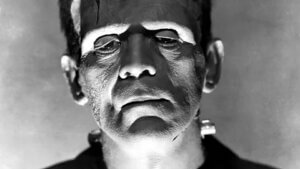 Universal became known as the monster studio, scoring with the epoch-making Frankenstein and Dracula with uber-stars Boris Karloff and Bela Lugosi.
The studio was able to ride the horror wave throughout the ’40s, but it all came crashing down in the 1950s as the drive-in craze exploded. Such upstarts as American International Pictures were eager to provide drive-in sci-fi fare like I Was a Teenage Werewolf and A Bucket of Blood. Cheap and cheerful, these films struck the perfect balance: watch a scary scene and then go back to making out in your car.
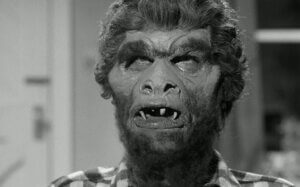 Universal tried to maintain its status as the big time monster studio, sometimes scoring a hit (Creature from the Black Lagoon), but frequently laying an egg. I mean, look at this makeup for Monster on the Campus. Looks like a gorilla starting to get in drag. Nowadays, it’s a goofy fun movie to watch, but it was out of touch back then.
In the hepcat 1950s, the studio’s output – sadly — was the visual equivalent of listening to your grampa sing “Freak” a capella. Meanwhile, Universal was also selling its monsters to Hammer Films, who went on to make successfully bloody Technicolor remakes of those classics.
As the decades rolled on, the studio system started to fade away. Talent was no longer “owned.” In fact, Sharon Gless (Cagney and Lacey) was said to be Universal’s last contract player, and indie directors would offer projects as complete packages, rather than being mere cogs in the wheel. The 1960s and ’70s represented some of the most creative work since the legendary studio output in 1939.
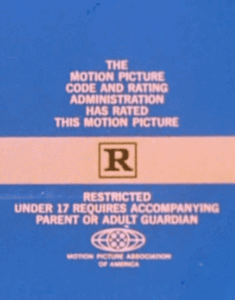 Movies began to grow up again, too. The old, restrictive Hays Code was replaced by the MPAA ratings system. More adult-themed films were being offered and directors who didn’t work for studios at all still found a way to make their passion projects a reality. The 1970s really exploded with shockers like Texas Chainsaw Massacre and Last House on the Left. These were films that dared you to watch them. Rob Zombie has recently been trying to make ’70s-style grunge with his Halloween remakes, but you can’t do it. Some eras you can’t recreate.
Anyhow, Universal recognized the trend: outré exploitation that the young folk seemed to love. The studio went on a hiring spree, grabbing auteurs right and left and financing projects that they could make under the Universal banner. Could they make the studio the “House of Horror” once again? Let’s see how it worked out.
John Carpenter
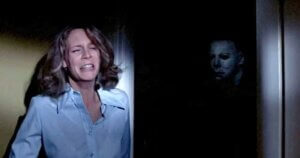 Halloween broke all sorts of records, and well it should have. It’s a masterpiece of “creepy.” Watch it now and you’ll realize it’s not really gory or nasty. And Carpenter did a masterful job of making it incredibly suspenseful without resorting to those “pop-up” scares like those in Paranormal Activity and its ilk.
Look at this frame. Laurie Strode keeps killing Michael Myers and he keeps not dying. Finally she thinks he did.
Instead of suddenly jumping out to grab her, he slowly materializes like a phantom from the darkness behind her. The shot seems to go on for about 30 seconds. When I saw it upon its original release in 1978, the audience was driven absolutely wild, and it was earned, sustained terror — not the “screamy pop-up” crap.
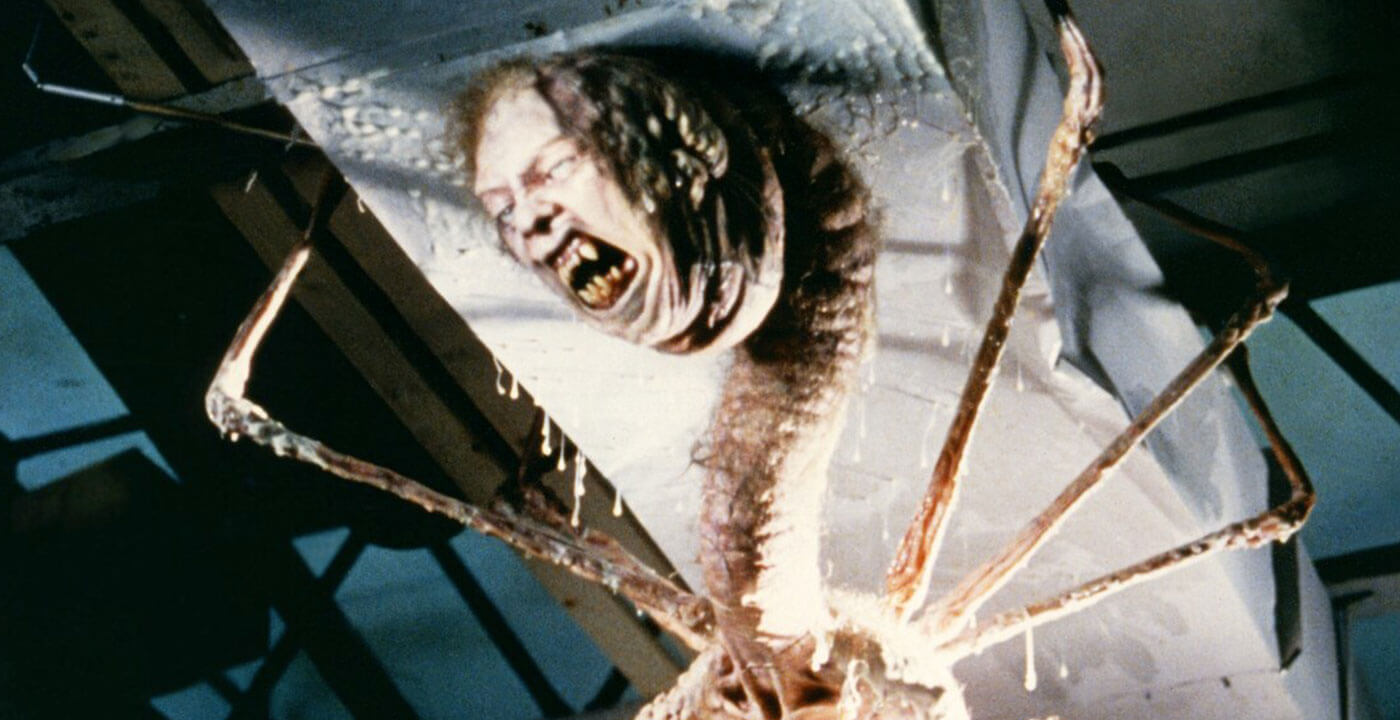
Carpenter was set on doing a big-budget remake of The Thing (1982). Super gory, profane and intense, its boxoffice performance was eclipsed by E.T., another movie made by the same studio at the same time. You may have heard of it. Well, The Thing has become a cult classic and E.T. is that movie you show to your kids on Freeform when you want them to settle down and take a nap.
The studio was not happy with The Thing‘s performance, but he stayed on for They Live and Prince of Darkness. He also remade Village of the Damned in 1995. It was a big ol’ bomb, but I’m rather fond of it.
Wes Craven
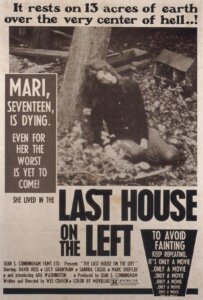 Director of the horrifying Last House on the Left and The Hills Have Eyes as well as the landmark Nightmare on Elm Street, Craven was a shoo-in for providing the new Universal horror product.
Unfortunately. Universal caught him at a sort of experimental phase. Shocker, The People Under the Stairs and The Serpent and the Rainbow all had promising backstories. but the result was pretty emmm… They started interesting, but stalled out.
Craven said he wished he could reshoot Shocker.
This picture actually meant a lot to me because it was the first time I had sort of autonomy… and it was also the sort of the introduction of the partnership between myself and Marianne Maddalena, which has lasted now for I think 14 or 15 years and has created an environment for me making films that has been extremely beneficial and also a great friendship.
Of course, we all know he went on to make the mega-hit Scream and its sequels for other studios.
David Cronenberg
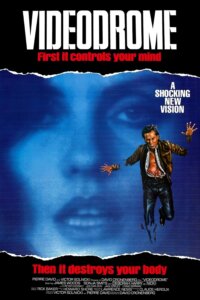 No one picture pops out as the one film to lure Cronenberg to the studio, but perhaps “body horror” became trendy as a genre. The only movie he made for Universal was Videodrome, a boxoffice bomb that also became a cult classic.
Videodrome eerily predicts the involvement of the internet in society today, and it demands rewatching. Like Network, the bleak comedy that is really a documentary now, it has more stories to tell.
Cronenberg fared much better at Fox. The Fly, Dead Ringers and Naked Lunch were all critical hits, even though The Fly was the only one to cash in big time. I’m also fond of Crash and eXistenZ, made for other distributors.
It’s interesting how distribution channels have evolved today. Home video is pretty much dead; TV syndication is totally dead. You have to go to streaming to see this film now…and maybe you’ll be watched as you watch Videodrome! Heh heh heh..
Tobe Hooper
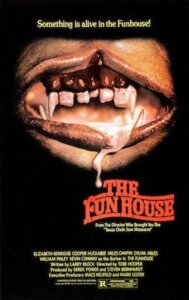 Hooper was the director of the ultimate drive-in film, The Texas Chain Saw Massacre (1974). Here’s another film that people swear is wall-to-wall blood and horror, but it relies more on suspense than grue. Even the notorious “girl hung on a meathook” is shown without the actual insertion. A budgetary considerstion, probably, but that makes it even more shocking.
Hooper attracted the attention of Hollywood movers and shakers, especially Steven Spielberg. The jury’s still out on who directed Poltergeist, but it definitely has the Spielberg influence.
The sole Universal film attributed to Hooper was actually a pickup. The Funhouse, made in 1981, definitely has the Hooper vibe with its sleazy carny atmosphere. The casting director must have had a blast. Cult stars William Finley (Phantom of the Paradise) and Sylvia Miles (Midnight Cowboy) both show up for the ride.
To read about the original classic Universal horror films, you may enjoy this.