
My Favorite Film of Them All
I’ve always been a movie lover, especially horror and culty stuff like Night of Living Dead and The Fearless Vampire Killers. I had to fight with my mom to watch “Creature Feature” on Saturday night. She said that it was warping my mind. Well, I guess it was.

But back in the day, drive-in theaters would screen Italian and Spanish imports, dubbed into English and more shocking than their American counterparts.
And they were probably super cheap to rent. Here is where I discovered the incredible Barbara Steele, whose ethereal beauty elevated many an Italian horror film like Mario Bava’s masterful Mask of Satan.
In 2007, she narrated Brand Upon the Brain!, the Canadian director Guy Maddin’s opus that was filmed silent but was intended to include a live score, SFX and narration.
Of course, Maddin’s muse Isabella Rosselini served as one of tha narrators, as did Crispin Glover, Udo Kier, Karen Black (another of my late great loves), Laurie Anderson and Eli Wallach. But when I saw that the mysteriously beautiful Steele was going to be there, I had to go.
It was there at the American Cinematheque at the Egyptian in Hollywood that I got to meet my idol and get her autograph. It was one of the most exciting days of my life. She didn’t say a word, but she smiled and looked me straight in the eye as she handed the signed program back. And she smiled exactly as she did in the great original 1978 version of Piranha (see above).
But I digress. When I started college, I took a film course and my world expanded. No more fearless vampire killers. Along with the silent classics The Battleship Potemkin, Nosferatu and The Cabinet of Dr. Caligari, the instructor also showed us a sound movie — and my whole world went crazy. Does film make you think and get introspective? Oh, hell yes it does!
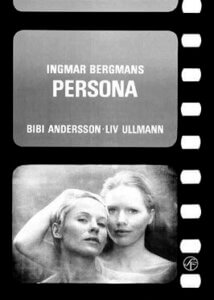 Persona, made in 1966 by Ingmar Bergman, is a film that constantly reminds us that we’re indeed watching cinema. And it’s really a home movie. It was made on Faro Island, where Bergman lived and worked.
And his muse, the incredible Liv Ullmann, stars as Elisabet Vogler, an actress who suddenly stopped speaking onstage because she was overwhelmed by the cruel reality of the world. Bibi Andersson is Alma, a young nurse hired to pull Elizabet out of her shell.
They go to stay at a cottage on Faro, which seems blissful at first. Elizabet still won’t talk, but she seems content.
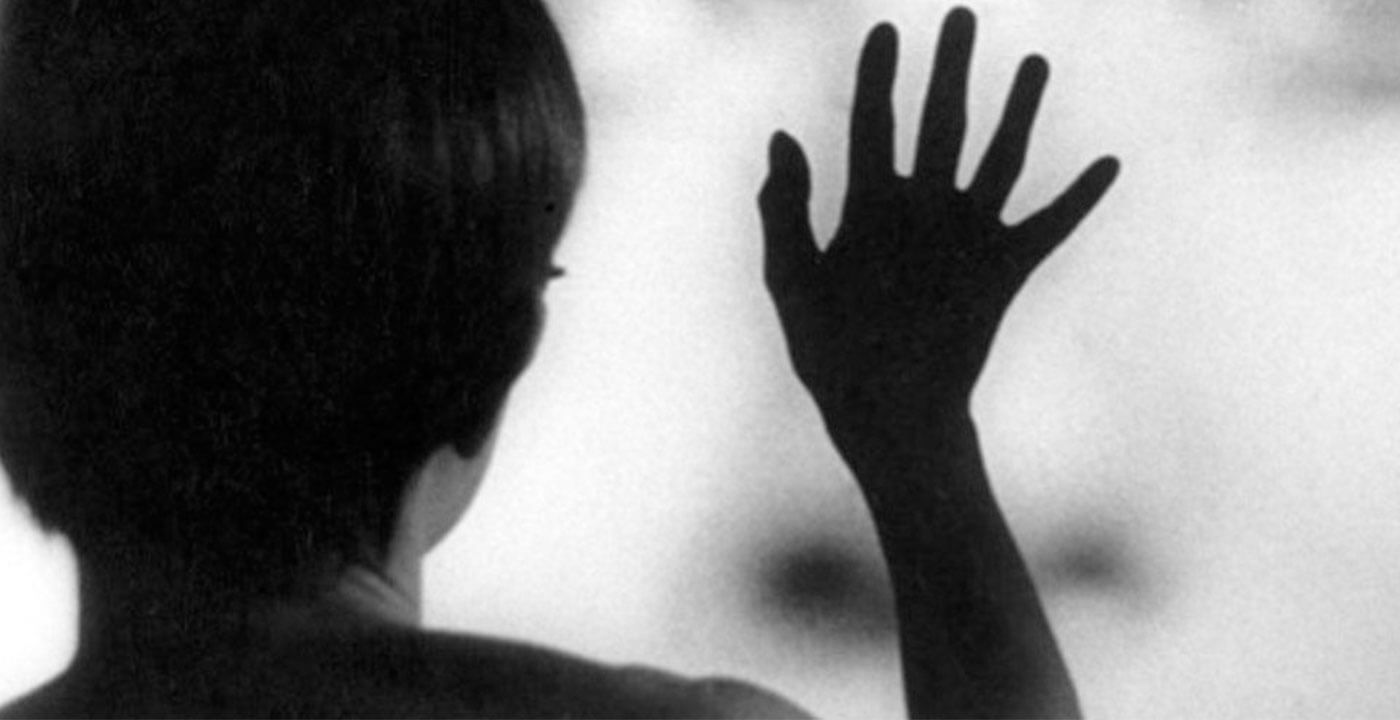
Persona has much more on its mind, however. The late German film historian Thomas Elsaesser wrote, “Persona is instantly recognizable thanks to two shots that have become its emblems: a boy touching a woman’s face on a giant screen and two women looking at each other (and us) across an imaginary mirror.
“Defining images for the film, they also stand for an idea of the cinema — in fact, for two distinct but complementary metaphors of what cinema is: a portal, a window, a passage you can enter or (almost) touch, and a mirror, a reflection, a prism that gives you back only what you project onto it. Persona is also cinema about cinema — a point that Bergman makes clear with his six-minute prologue montage sequence — which is one of the reasons it is such an irresistible challenge for writers.”
Elizabet’s stony silence encourages Alma to talk and talk, turning her life into a confessional. As she describes all the dirty sex she’s had, she feels cleansed to have admitted it. For 1966, even in Sweden, this was some salty stuff. There’s also a flash cut of an erection during the opening montage to keep us on our toes.
Elizabet just watches her without a sound but with an occasional wistful smile. It’s only when Alma is taking their letters to the post office that she realizes her scandalous escapades have been chronicled to Elizabet’s husband, warts and all. But it’s her fault. She opened the letters that were supposed to be private.

She furiously storms back to the house and — when the women come face to face — the film rips apart, shredding their friendship. Later, Alma accidentally drops a glass on the patio. Picking up the broken pieces, she leaves one shard on purpose for Elizabet to step on. She does, and Alma smiles with grim satisfaction.
Now that the film has been broken, it also seems to be loosened of its traditional narrative fetters. We begin to wonder if Alma and Elizabet are two sides of the same woman, especially when the latter’s husband arrives and has sex with Alma — or does he?
Persona is only 90 minutes long but it goes everywhere it needs to.


